Showing posts with label ethics. Show all posts

Sunday, April 23, 2017

Rachel Dolezal: Columbusing Blackness


For a few weeks now, I’ve been trying to write something about the colonizer mentality (aka ytppul ytppuling) but the words have been slow to come. The idea remained unclear until Rachel Dolezal’s latest interview with Ijeoma Oluo appeared in The Stranger. (here) Suddenly, it all came together because Rachel being Rachel, her offerings opened new mental vistas for me. Rachel, I thank you.

When I write in strong terms about the 'performance of Whiteness' in (mostly, but not exclusively) American society, I do so knowing that I have White friends who may take offense at my generalization. I understand the offense you take but I cannot apologize for it. I’m drawing a conclusion from the evidence left by hundreds of years of behavior by millions of people. I don’t even know if it’s a generalization per se or just the drawing the obvious conclusions.

The inclination towards supremacy, towards reaping where one has not planted, is what I refer to as ytppul ytppuling (YY) or the colonizer mindset. YY is Whiteness moving in the world in the way it best knows how: taking the path of least resistance, typically right through someone else's most sacred of spaces, directly to its destination. Like marauding ants through your vegetable patch, yytppuling steals your blooms, your leaves, and ultimately, your entire garden. Call it the colonizer mindset at work if that language makes you more comfortable, same difference really.

YtppuI ytppuling is, to my mind, the perfect explanation for the phenomenon that is Rachel Dolezal. I hadn’t intended ever to speak on her, but she’s come back again, this time with a new book, justisplainin’ her Columbusing of Blackness. She wandered barefoot and unwelcome, with her braids, her tan and her new African name, right into the middle of my crisis of trying to explain ytppul ytppuling, essentially offering herself as a living visual aid. Thanks. I think.

Dolezal is a helluva character. My belief is that she has read just enough history to understand and appreciate the triumphs of Blackness, and out of an abundance of admiration, and perhaps a surfeit of jealousy, she has decided that she wants to be Black. Hey, I get it. I wanna be Black too…..oh wait.

I wish I could say that I sympathize with Dolezal but in truth, I don't.

Rachel is the worst kind of fraudulent operator to me. She is not Black. This is not up for debate to my mind. She. Is. Not. Black. What she is, is a thief. She has co-opted Blackness for its apparent (cultural) benefits and sexy cool points, while wholly sidestepping its social, economic, and legal burdens. Worse still, she traffics in within-race colorism on the sly. She knows enough to understand that if folk think she’s Black, she’ll receive the deferential treatment that Black folk often mete out to light skinned women of color. She’s been known to talk about colorism, so I don’t think it’s a stretch to suggest that she meant to tap into Black people's own strain of anti-Blackness. She may wanna be Black but she ain’t wanna be no midnight Black. Nuh uh, she wanna be Becky with the good hair!


And when she experiences disapprobation and rejection – not on account of being Black but rather on account of the obscenity of her actions – she turns around and claims discrimination. Jumping Jehoshapat, where to start?

Worse still than the absolute asshattery of her explanations of her Blackness, her position creates a universe wherein Blackness isn't real; it's just some accessory that one can don or doff at will. Or at least, she can. Black folk can’t take theirs off but that is of no consequence.

This whole episode is just more Darth Becky on steroids shit - White privilege, White cultural appropriation, ytppul ytppuling (aka colonizer mindset) bull shiggety: #ColonizerMindsetHardAtWork. 

TheRoot.com: Three Darth Beckys all in a row

Rachel, from her clearly superior colonizer perspective, can decide to be Black and affect the pose; she can claim the benefits while escaping the challenges. As a White woman, she demanded inclusion (suing Howard University for exclusion on the grounds of race) and then when that failed, she masqueraded her way into inclusion. And she could do it all with a straight face, because whyever not?

In every way, Rachel’s story is the colonizer story: “Mine eye doth perceive it, mine heart doth want it, I therefore must have it.” Rachel wants Blackness and voilĂ , it is hers. The colonizer does whatever he/she must to have whatever her greedy little heart desires because it is all hers for the taking. She needs no permission and Lawd knows she will not tolerate your challenges to her logic, her excuses or her justisplanations!!

Darth Becky can center her White self even in the universe of Blackness because Whiteness is the center of the known universe. The world is Becky’s oyster and the Beckster is taking all the damn pearls. Deal with it.

The colonizer mindset, ytppul ytppuling, it’s a thing, a real thing. Rachel Dolezal is proof of that because there she is, reaping where she certainly has not sowed. This ladies & gents, is Rachel Columbusing Blackness, taking up where the original colonizer left off.


Thursday, January 26, 2017

Does My Vote Really Matter?

For those who didn’t think their vote counted. Here’s a newsflash: it does. Every time, it does.  But for it to count, you gotta show up. 

The next time you’re tempted to stay home as yourself these questions………….

1. What might happen to my environment if I don't vote?

Answer: much, much more of this. Remember "Drill baby drill!"?


Meanwhile, out in the real world this is what is actually going on.

The 'Drill baby drill" crew swears up and down that drilling is now safer than ever, but that red river ain't looking like a particularly good example of safety in action. Unless water's supposed to be red?


2. What could happen to my (or my friends') Civil Rights if I don't vote?

Answer: an erosion of the comfortable, easy, diverse universe you've known your whole life.


It is not accidental that it took this nation until the late 19th century to begin to acknowledge the Civil Rights of some of its members. Neither is it a surprise that those rights have been challenged and undermined at every opportunity since.  That's kinda the way we do. Resistance to the principles and practice of equality remains a central theme of American social, political, and economic life.  

If people who are uncomfortable with growing diversity are going to vote, then those of us who embrace it must vote in larger numbers. That's the math.

3. What could happen to my healthcare if I don't vote?

Answer: the candidate you fail to vote against might wipe out any chance you have of owning some.


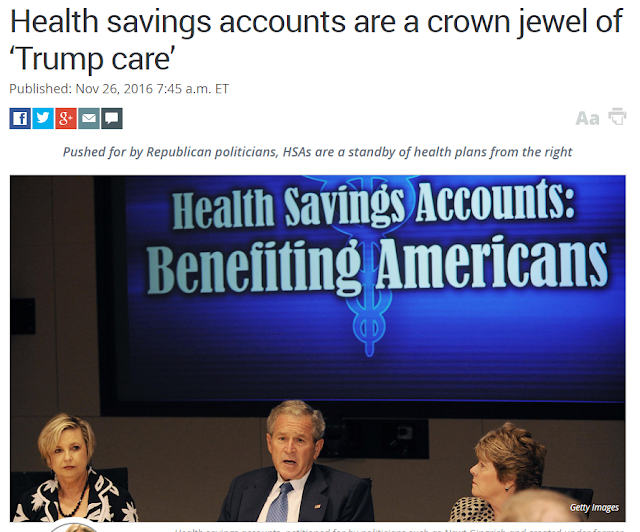
If you're really lucky, the eventual election winner might think health savings accounts (HSAs) make sense. But in a world where income barely meets current expenses HSAs are not going to help you much.  


Or, alternatively, the winning candidate might gut healthcare access entirely, as they seem intent on doing in Minnesota. Check out this list of procedures and care options that AREN'T covered. Numbers 1, 5 and 23 are especially interesting. But don't worry about them because there's no war on women.


As I written before, democracy is nothing without us in it. We may have forgotten recently that democracy won't continue without our express participation but I think we know different now. We have the proof that it will not. We gotta show up. Every time. 

We must get back in the game. And we must do so in numbers too large to ignore. 

Saturday, January 7, 2017

Joe Medicine Crow - shining just beyond the common man's sight

I read the story of the death of Joe Medicine Crow with tears in my eyes. I cannot tell you why......or maybe I can. Medicine Crow represents something. Or he should. 

Here are five thoughts that floated through my mind as I read his story.


1. Joe Medicine Crow represents the last of a particular stripe of man. He was the last man in his tribe to successfully complete the requirements to become a war chief of his tribe. There are specific requirements to become the chief and Joe, without intending to do so in some instances, completed them all. From the article, 
"During World War II, when he was a scout for the 103rd Infantry in Europe, he strode into battle wearing war paint beneath his uniform and a yellow eagle feather inside his helmet. So armed, he led a mission through German lines to procure ammunition. He helped capture a German village and disarmed — but didn’t kill — an enemy soldier. And, in the minutes before a planned attack, he set off a stampede of 50 horses from a Nazi stable, singing a traditional Crow honor song as he rode away."

Maybe he meant to complete the requirements, or maybe, those requirements were so deeply ingrained; were so much a part of who he was, that completing them was inevitable? How many more like him are there? How many of us have who we are so deeply engraved into our DNA? How much has our approach to Native culture robbed us of access to that strength and those character traits?

Medicine Crow was the last of a certain kind of man and he was our last bridge to a particular tradition. He was a war chief, a writer and an activist and while there are others who are each of these, even some who are two of these, there are no more who are all of these in his tribe, and quite possibly, in any tribe.

2. Joe Medicine Crow represents the distance we have yet to travel between the Trail of Tears and equality. Bear in mind that it was only 7 years ago that he was recognized with a Medal of Honor for his lifetime's worth of activism, storytelling, and serving as griot for his tradition and his people. His death serves as a stark reminder of how far we have yet to go to arrive at a place of true equality and just treatment because.....

3. In the year that Joe Medicine Crow died, we had the images and events of the Oceti Sakowin Camp and the Standing Rock Sioux tribe.

In the year that Joe Medicine Crow died, we saw dogs and hoses turned on peaceful Native protesters (water protectors) in the dead of winter.

Water protectors drenched by water cannons @ Standing Rock
Stephanie Keith / Reuters

4. In the year that Joe Medicine Crow died, we have seen flagrant desecration of sacred land and the trampling of treaty rights in the quest for profit.

5. In the year that Joe Medicine Crow died the past served once again, as prologue.
Look closely at yourself America. Do you like what you see?

Five hundred+ years removed from Columbus’ ‘discovery’ of America, one might hope that Native Americans - Joe Medicine Crow's people - would finally be seen and respected as fully American. And yet, we are still not there yet.


Medicine Crow's death signals the end of an era as such deaths always do. His death also signifies that the new era has yet to begin...or perhaps it has, just beyond our view? Perhaps men like Gyasi Ross and David Archambault II are made in the same tradition and are doing similar work? Perhaps there are plenty of others whose names we (I) do not yet know?

What we do know is that US history is yet to turn the corner....a corner that Medicine Crow and men and women like him tried to bring us to. US history is yet to come to terms with its claim that "All men are created equal" or "with liberty and justice for all". 'All' not some, not some are more equal than others, but all. Equal. No provisos. 

The 102 years that Crow lived may have been enough to build railroads, an interstate system, the institutions of 'democracy', an internet, Facebook, Instagram, Google, Twitter and myriad multinational businesses and industries and the largest economy on the planet, and yet it was not quite enough time for America to live out its creed; for Native people to realize all the rights of citizenship. Some things take longer than others I guess. How how long exactly is equality gonna take? 102 years and counting. 500 years and counting. 

The life of Joe Medicine Crow, is a love song no, a life song of and to his nation, to all nations and especially to this one that still has not quite got it. 

In spite of every dishonorable thing done to him personally or to his people generally, he fought for this country….the country of dogs and water cannons in mid-winter 2016. More than a hundred years after his birth, this is still the nation of dogs and the water cannons. 

In 2016, we said fare-thee-well to an inordinate number of 'stars'. But what is stardom? With all due respect to the famous, Medicine Crow's death is a clear reminder that some of our brightest stars have shone and burned out just beyond the common man's sight. 

May his spirit travel safely on.


Friday, October 29, 2010

Ethics vs Innovation. Competing commitments?

What a strange story!  I recently read on a blog an article about the tension between innovation and ethics and all I could think after reading it was that clearly I had missed something.  The author referred to an article she had read elsewhere that had caused her to make the intellectual leap that perhaps there was a tension between the two - innovation and ethics.  The trigger article is: If You Think It's Unethical It Probably Is,  written by Eileen Zimmerman which appeared in the NY Times on October 23, 2010.  You should give it a look. It's quite interesting.

Now that I've read Ms. Zimmerman's article though, I think I really must have missed something and I have to say that I don't quite understand where this tension between innovative thinking and ethics became an issue.  Ms. Zimmerman's article spends a lot of time talking about how to push back (without killing your career), if you think something you've been asked to do, crosses ethical lines.  Never does she suggest that there is a tension, nor indeed does she ever refer to innovation either covertly or explicitly in her writing.

To innovate (per dictionary.reference.com), is to "introduce something new; make changes in anything established".  Implicit in that definition is an understanding that that which is created is rooted in truth.  Perhaps that isn't implicit to anyone but me, but I fail to see how lying could be considered innovative, unless we are talking about taking an innovative approach to the facts.  An old choir director of mine used to joke about people who didn't know the music but would sing their own 'impressionistic renderings' of the songs.  That's innovation too I guess except it was greatly discouraged in the choir, as it should be in business.  Harmony easily becomes cacophony when people play fast and loose with the truth be that musical truth (the notes) or business truth (the numbers).

I am a big believer that innovation is the only way for an organization to stay relevant but I question whether anything that involves lying or otherwise misrepresenting the true facts of business performance could even be loosely categorized as 'innovation'.  I am also not sure that even on the keenest cutting edge of innovation it is necessary to compromise one’s ethics. I am certain that there are areas of scientific endeavor where the ‘edge’ goes beyond anything I can imagine, but where innovation challenges prevailing ethical constraints, processes usually exist to challenge those ethical lines.  Think back to the first IVF and the ethical debates that raged then.  Think now about stem cell research and the raging ethical debates in that field.  Innovation is all about challenging the status quo, but for those wishing to do so ethically, there are ways to challenge without stepping all over moral and/or legal boundaries.

In most businesses, it seems to me, where ethical lines are crossed it is not because of some wonderful, business-saving innovation that runs afoul of prevailing ethical norms (creating some mythical tension), but rather it is usually because of a blind and dangerous (just ask Wall Street) focus on a profit motive.

Once business people take their eyes off ethics and focus wholly and solely on profit margins, P/E ratios and market capitalization, trouble surely follows.  Innovation is not the enemy of ethics, greed is.  The tension really is between money and ethics.  Don't blame innovation.  She wasn't even there when the bacchanal began.