Showing posts with label education. Show all posts

Thursday, January 26, 2017

Does My Vote Really Matter?

For those who didn’t think their vote counted. Here’s a newsflash: it does. Every time, it does.  But for it to count, you gotta show up. 

The next time you’re tempted to stay home as yourself these questions………….

1. What might happen to my environment if I don't vote?

Answer: much, much more of this. Remember "Drill baby drill!"?


Meanwhile, out in the real world this is what is actually going on.

The 'Drill baby drill" crew swears up and down that drilling is now safer than ever, but that red river ain't looking like a particularly good example of safety in action. Unless water's supposed to be red?


2. What could happen to my (or my friends') Civil Rights if I don't vote?

Answer: an erosion of the comfortable, easy, diverse universe you've known your whole life.


It is not accidental that it took this nation until the late 19th century to begin to acknowledge the Civil Rights of some of its members. Neither is it a surprise that those rights have been challenged and undermined at every opportunity since.  That's kinda the way we do. Resistance to the principles and practice of equality remains a central theme of American social, political, and economic life.  

If people who are uncomfortable with growing diversity are going to vote, then those of us who embrace it must vote in larger numbers. That's the math.

3. What could happen to my healthcare if I don't vote?

Answer: the candidate you fail to vote against might wipe out any chance you have of owning some.


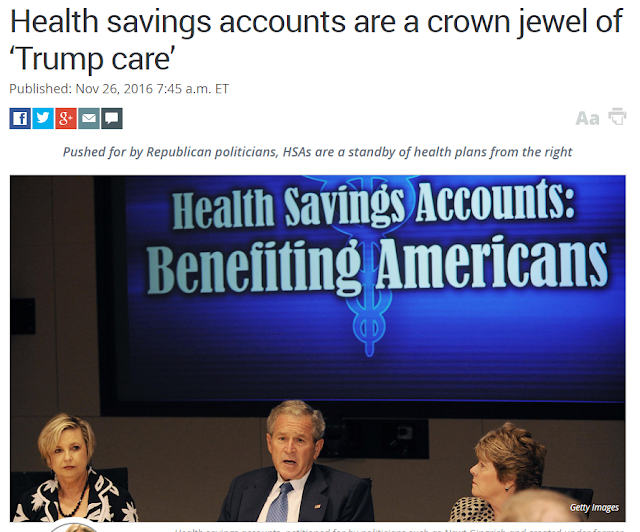
If you're really lucky, the eventual election winner might think health savings accounts (HSAs) make sense. But in a world where income barely meets current expenses HSAs are not going to help you much.  

Or, alternatively, the winning candidate might gut healthcare access entirely, as they seem intent on doing in Minnesota. Check out this list of procedures and care options that AREN'T covered. Numbers 1, 5 and 23 are especially interesting. But don't worry about them because there's no war on women.


As I written before, democracy is nothing without us in it. We may have forgotten recently that democracy won't continue without our express participation but I think we know different now. We have the proof that it will not. We gotta show up. Every time. 

We must get back in the game. And we must do so in numbers too large to ignore. 

Thursday, January 13, 2011

Forget the Science Fair, it's a Science FEAR

I'm standing one step away from the annual childhood ritual of the science fair and I have to say, it's really a strange rite of passage with (to me) fairly limited educational benefits.

How can I count the ways this thing makes little sense to me? Well first there's the wholesale application of the scientific method. With all due respect to the scientific method, this is not something that is easily learned, certainly not by eight year olds! The steps of the method, listed below, may seem quite simple, but at 8 or at any age and with any kind of learning disability, some significant effort has to be made to make these principles accessible. My question is: why make an experiment, requiring the application of all 6 steps of the method a requirement at the second grade, especially when there is little likelihood of the teacher having covered all these concepts?

Why not create a science fair system that begins with teaching the importance of formulating questions? Later, the teachers can graduate to incorporating doing background research, still later graduating to formal hypothesis generation and hypothesis testing. With each passing year, as more is taught, students are better able to apply more and more of the method to their projects. Projects could then become more elegant and more learning would take place. With such a process, the curriculum would remain accessible and the learning would be lasting, the whole point of education.

As it is, it seems to me that asking an 8 year old to 'construct a hypothesis' is ridiculous in the extreme. It is entirely possible that my perspective is informed by the challenges of our second grader. Her problems with formulating and asking probing questions are a function of her ASD, but I'm fairly certain that she isn't the only child who, in the absence of sufficient teaching, can't figure out what a good scientific question might be. How hard would it be to actually, I don't know, teach the thinking involved in science? How hard would it be to expose the children to these concepts in ways that make science more enjoyable rather than more terrifying?

What I most resent is the way the whole science fair is set up, such that it seems only to serve two negative purposes. First, it serves to alienate children from science. I've heard stories of parents who simply recycle projects from one year to the next. Where's the learning in that? What are we teaching our children? It's definitely not the rudiments of science, more likely it's the rudiments of cheating. The second purpose that seems to be served here, is that the system inadvertently alienates children from their parents. If a parent is a high school graduate with little science exposure, how does she/he help the child and if she/he can't, how does that make her/him look to the child? Further, how does that help the education system achieve its goal of engaging parents in their children's education?

The whole thing seems a terrible waste of time and emotional energy to me, but that's just me. Oh and at the end of the day, it's the parents doing half the thinking behind the output. What's the point of that?

============================>

The 6 steps of the Scientific Method:
  • Ask a Question
  • Do Background Research
  • Construct a Hypothesis
  • Test Your Hypothesis by Doing an Experiment
  • Analyze Your Data and Draw a Conclusion
  • Communicate Your Results