Showing posts with label democracy. Show all posts

Tuesday, June 6, 2017

Voter suppression: deeply rooted in American history


Originally published on BlackandIntellectual.com

Voter suppression is deeply rooted in American history. Keep that in mind.

Lauren Victoria Burke, writing in The Root offers that ”according to many experts who watch elections, the real controversy of 2016 is [sic] the hundreds of thousands of votes that were never cast in the first place because of widespread voter suppression.”

Thanks to John Roberts’ SCOTUS – in the Shelby v Holder decision of 2013 – and the flurry of voter ID laws passed thereafter, Republican efforts to disenfranchise vast swathes of the country have been largely very successful.


in the run up to 2012 Republicans told us, in both word and deed, what they were about to do: suppress the vote and steal an election. We didn’t believe them and we certainly didn’t respond aggressively enough, to our eternal peril.

We had forgotten that voter suppression is deeply rooted in American history.

For years, Republicans have been selling the notion that government should be small enough to drown in a bathtub and they have been singularly focused on making that possible. The reality of course, is that Republicans  want to drown the parts of government that serve people, but the parts that support corporations? Those parts they would sustain.

In the pursuit of their goals, since they can’t very well go full-on authoritarian and suspend all elections, Republicans have had to do one better: limit the eligible voting pool by means fair or foul. But so-called conservatives, which is to say, those wishing to conserve the status quo, have been doing such things since America was begun. This is not new.

Voter suppression is deeply rooted in American history.

“Even as the rising American electorate gains momentum, new regressive laws, rulings, and maneuvers are threatening voting rights without facing the strict scrutiny that would come with a constitutional right to vote”[i]

Because the Constitution does not specifically enshrine the right to vote to all legal citizens of a certain age, in every era, efforts have had to be made to either secure the right to vote or to protect that right.
“While the franchise expanded during some moments and in some places, it contracted in others, depriving Americans of a right they had once held. Between 1790 and 1850 — the period when property requirements were being dropped — four Northern states disenfranchised African-American voters, and New Jersey halted a 17-year experiment permitting women to vote. During this same period, nine states passed laws excluding “paupers” from political rights.
Many of the late 19th- and early 20th-century laws operated not by excluding specific classes of citizens but by erecting procedural obstacles that were justified as measures to prevent fraud or corruption. It was to “preserve the purity of the ballot box”[ii]
That latter point, “erecting procedural obstacles…justified as measures to prevent fraud or corruption” is very much a part of today’s voter suppression play book. Replace the words ‘erecting procedural obstacles’ with the words ‘requiring voter ID’ and you get my point.
The history of voter suppression
Given that the Constitution does not explicitly indicate who may vote, each state may – entirely within its rights – make that determination, and write laws that include or exclude various groups.  Consequently, any state that chooses so to do, may decide to remove individuals’ names from the voter rolls for any reason – reasonable or not – that they choose.
Even as some minorities were being welcomed into the body politic (property-owning Black males in 1870, women in 1920), others were simultaneously being excluded. In 1850 for example, when the 15th Amendment was ratified, all women, non-African-American minorities and many non-Christian religious groups were being denied access to the ballot box.
After Reconstruction, newly elected conservative Democrats began to write legislation that would have the effect of suppressing the black vote. These laws introduced literacy tests, poll taxes or in some cases "whites only" primaries in direct opposition to federal law. Attempts by would-be voters or candidates to break these rules would often lead to deadly consequences. These intimidation and suppression campaigns were so successful that only 3 percent of voting-age African-American southerners were registered to vote in 1940.[iii]
It wasn’t until the Voting Rights Act of 1965 that literacy tests were explicitly banned. Poll taxes were banned a year later after the Supreme Court determined that they were unconstitutional.
But voter suppression didn't end in the 1960s. Still very much with us today are some of voter suppression’s best tactics: intimidation; disinformation; voter ID; reduction of early voting; removal of same day registration and the closure of polling stations. All of these are methods currently in use to reduce turnout and swing election outcomes.
Today, joining the family of suppression tactics, we now have Interstate CrossCheck, the mammoth voter purging system that allegedly removed 1.1 million voters from the rolls in 2016.
America learned in her formative days that the surest way to ensure the outcome of an election, to protect the status quo and those it benefitted most, was to exclude from consideration, the views of those who sought change. And so, in every generation different groups have had to fight for the granting and protection of their access to the ballot box. This current age is no different but we have become so accustomed to having the right to vote, that we have forgotten that access wasn’t always quite so broad or so easy. But we forget the history of suppression at our peril. By forgetting, we have allowed it to return and it has returned with a vengeance.

As a nation, we may claim that our foundational principles are “democracy, rights, liberty, opportunity, and equality”, but our history doesn’t bear this out. We have long claimed democracy as a foundational principle and then suppressed the voices of parts of the populace. We have long claimed equality as a foundational the principle of and then had unequal access to the ballot. These contradictions run through American history and we forget these contradictions at our peril.

In the next installment, we’ll take a closer look at Interstate CrossCheck, how it works, and where it may have worked in 2016, to subvert the will of the people.


[i] From http://www.fairvote.org/
[ii] From NYT article The Strange Career of Voter Suppression, February 17 2012

Saturday, January 28, 2017

Ask not for whom the bell tolls


The president's de facto Muslim ban and the closing of the borders to foreign-born Muslims brings this poem to mind. Again.  

Twice this week. this poem has seemed a propos. First, it was during the ugly public squabble between Mexican president Enrique Peña Nieto and the US president and then again yesterday, with the announcement of the Executive Action on Immigration.

Truly, no one could have said it better than Donne, but let me ask you:

No man is an island, 
Entire of itself.
Are we an island America? Entire of ourselves? Needing no one, wanting no one, harming no one, seeing that no harm is done?

Every man is a piece of the continent.
A part of the main. 
America, a nation of immigrants, each of them a part of the main.....or perhaps not. I wonder, our dual citizens from seven faraway lands, are they not 'a part of the main'? Should they simply be 'washed away by the sea' as if they were of no import?

If a clod be washed away by the sea, 
Europe is the less. 
We are the less when we cast them aside. Do we choose to be less? Out of fear? Ignorance? Rigidity? Bigotry? Spite?

As well as if a promontory were. 
As well as if a manor of thy friend's 
Or of thine own were: 
Are we not 'less' when we speak of our brothers and sisters in dismissive, ugly language? Are we not much less than or simply unequal to our values? 

Any man's death diminishes me, 
Are we not diminished? Thinking on this now, I wonder if this poem isn't also relevant to the whole ACA debate but more of that anon and elsewhere.

Because I am involved in mankind, 
We are involved in this, worse, we are implicated. We are implicated in the refugee crisis and we are morally implicated in our failure to act to solve it. 

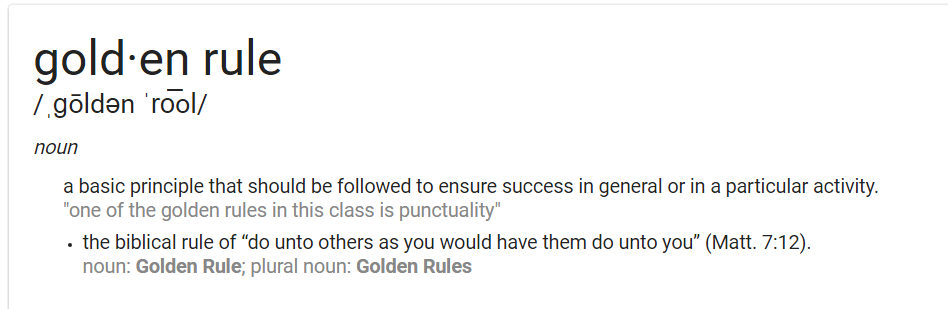
Our faiths, all of our faiths, are founded on the Golden Rule: do unto others as you would have them do unto you. Are we doing as we would like to be done to? Do we care if we aren't? What of our great values by which we have always set so much store? 


And therefore never send to know for whom the bell tolls; 
It tolls for thee.

The bell is tolling America, ask not for whom it tolls, it tolls for thee. 

The bell. I hear the bell. Do you hear it America? It's playing your song.


Friday, December 30, 2016

Can you hear me now?

I see and hear people's pain over the outcome of this election, and as much as I too am pained, I want to scream, "Can you facking hear me now?!" It's a bizarre thing to be caught between Schandenfreude and grief.

If, as a nation, we hadn't made such a practice of marginalizing people and then dismissing their wailings; if we hadn't made such a practice of enshrining our bigotries in law and social practice, we might have avoided this pass. But no, being ugly to those not like us is what we do; it's who we are and so here we are. How're you liking the view so far?

There's plenty of talk about identity politics now in the post-election period but what is that exactly? Is that expressing concern for and crafting solutions to the problems of specific groups? Cuz that just sounds like 'politics' to me but I could be wrong about that. It seems to me that the only reason we would need identity politics is if we still believe that some identities are more equal than others......but I could be wrong. Identity politics is the name we've come up with for the politics that gives a shat about non-white people. 

Rather than attend to the needs of the working and middle classes broadly, politicians have been scrambling to attract one segment or another by offering goodies and benefits and subtly downplaying the legitimacy of other groups' demands. We run a zero sum politic that results in a nearly-zero-for-everybody-but-the-one-percent outcome and then act all surprised when folk retreat and vote along tribal lines? 

My assessment reamins that our troubles go back to our original sin (which I've already written is not slavery but White supremacy). Our refusal to treat every citizen/resident equally has had and will continue to have consequences but we are committed to our three monkeys approach....because it's working so very well!


We will not face the issue of race like adults. We run from the challenges like an African distance runner closing in on the finish line of a marathon: with a burst of incomprehensible speed, racing as if there were a gold medal awaiting us at the finish line. Hint: there ain't, but carry on.

As a nation, we're yet to accept that all citizens are equal. Oh we talk about "with liberty and justice for all" but those are empty words. They have absolutely no meaning and they never have in this society. When have we ever tried to live them out? Name me an era. We talk about them but we have zero interest in putting them into practice.

This nation started from a place of inequity, dismissal and oppression. The Naturalization Act of 1790 opened the door to immigration to "any alien" who was "a free white person". That's where America's ideas about who could be American began and while much has changed, we continue to weaponize our bigotries [i] every chance we get. 

And so now, when I see latte liberals [ii] sounding the alarum bells, beating their breasts and wailing about what these next 4 (8?) years will bring, all I really want to say is, "Welp, I guess you can hear me now huh? Shoulda heard me sooner. Shoulda stood up for the right thing sooner. And now, we can watch what little we've achieved be destroyed together. You comfy? You got popcorn? Cuz the show is about to start."

And if your takeaway is that I blame mealy-mouthed liberality for the pass in which we now find ourselves, you would be correct in your assessment. 

The responsibility for pushing back on ignorance was not the sole purview of POC, but it was left to them primarily. The responsibility for handling bigoted aunts, uncles, mothers and/or fathers was not POC's but you did not take it up. The responsibility to purge Town Councils, Boards of Education, PTAs and leadership councils of all kinds of gross racists and racialized policy-making was not ours alone but those best placed to repudiate hate simply did not stand up in large enough numbers. Rather than stand and call ugliness out, some of y'all chuckled quietly behind your hands and enjoyed the warmth and comfort of your privilege. Welp, I guess you can hear me now, huh? I guess you had to have some skin in the game before you felt a need to play. Well the court is all yours. Lemme see whatchu got. 
  
From http://bennorton.com/mlk-on-white-moderates/
It is, as MLK Jr first said in his Letter from A Birmingham Jail: the White moderates' approach to the slow liberation of minorities is more harmful to progress than the intolerance and angry resistance of the bigot. Why? Because the coddling of bigots made bigotry feel welcome rather than loathed and in the damp and welcoming space you gave it, it grew. And so, here we are. Now, that there are acts of ugliness everywhere, I guess you can hear me now huh? Cool!

Still, I don't expect your newfound awareness to redound to my benefit in the long run. When the shit hits the proverbial fan, I'm pretty sure you're gonna do what you have always done: retreat into the comfort of your privilege leaving me, my kith and my kin to fend for ourselves. Self-preservation and all that. I hear you Boo. 's OK.

Note to self: nothing much has changed since 1963. Many are still moderate and me & mine are still Black.


[i] weaponized bigotry: public policy that enshrines bigoted beliefs into actionable steps to keep people of color locked into circumstances that limit their options and progress

[ii] Liberals who want me to believe that they and I share a philosophy but only as long as that philosophy ignores all notions of intersectionality. So should I wish to discuss my pocket book issues in reference to or in conjunction with my race, my gender, my sexual orientation, my gender identity or my national origin, the question will likely be asked, “Why you gotta bring into it??”


Tuesday, December 20, 2016

Democracy is work


What is this thing called democracy? How easy is it to create, to sustain? What are the factors that undermine it, strengthen it? These are the things I've been forced to think about since election night turned out way differently than I'd expected. 

Here are a few thoughts I've had about the fragility of democracy since that night. 

1. Every democracy is an experiment. Sometimes experiments fail, abysmally

We don't talk about this enough, nor do we respect this notion enough, but every democracy is a series of experiments. Every time we go to the voting booth, we are saying (and actively doing) something about democracy. We're taking control of it and staking our claim to it. When we fail to participate, we're doing precisely the opposite. When we shrug and walk away, we leave the door open to those whose version of democracy is anything but democratic. Those people are motivated. They show up every time. Those who have opposing views must be equally so.

It's tough to overstate how easy it is for this experiment in democracy to fail completely. With every tweet, every Thank You rally utterance, we are given further reason to question PEOTUS's suitability for high office, but we stumble on. We must. 

The American election process gives us an escape hatch in the form of so-called faithless electors of the Electoral College, but I'm pretty sure we won't use it (and, unsurprisingly, we didn't) but even if we had, then what? We would then have been in completely uncharted waters if the required 37 electors had said “Nay” to the Donald. 

And so we're a-stumblin' on because the people have spoken, though to whom and what exactly they said is an open question. 

The experiment continues. 

Whether the experiment will ultimately prove successful remains to be seen. 

2. Functional democracy? We have one of those?

This US democracy[i] may have been around for 240 years but it's not perfect; it never was, attestations to the contrary notwithstanding. After two centuries one might think that most of the kinks would have been worked out by now. Not so, mon cher! Equal rights? We're just not there yet. Equal justice remains a (largely elusive) dream; Civil Rights for people of color are barely 50 years old and are being undermined every year; equal marriage recognition is barely two years old - and could easily go away with the 'right' appointment to the SCOTUS; and the rights of LGBTQI people are still not completely protected under the law and such protections as do exist can be easily undermined; and prisoners are still technically enslaved and that's upheld by the Constitution. And that's after 240 years. 

Real democracy isn't like evolution, moving from one stage to the next, pushed on by necessity. No, democracy is art and with an unskilled painter, the outcome is no Mona Lisa. 

A relatively functional democracy is what the majority of Americans have always known. Because of that, none of us has any idea what it takes to establish this thing we call democracy from scratch; what it takes to create something from nothing. 

We've never had to consider that process before since we discovered our democracy in relatively good working order (hence the italicization of the word democracy) and generation after generation has mostly left it in slightly better order. Our job, generally, has been to 'perfect' the union not create it; mind the store not build a startup. Four years from now, things might be  a little different.


We look at places like Grenada, Syria, Iraq, Libya  and much of Latin America (places, coincidentally, where our government has had a hand in destabilizing or removing governments) and cast aspersions on the character and will of the people and their leaders to establish a lasting peace, a shared prosperity and a participatory democracy. We've had the temerity to judge others' efforts at establishing democracy when we haven't the first clue what it takes to create political and social order out of chaos. We have no idea what it takes to rebuild a failed democracy, especially one broken by an authoritarian, but we may be about to find out. 

Let's hope that our years of sneering at others don't come back to bite us in the arse.

3. When it comes to democracies, 'functional' ain't the default setting

We've been lulled into a false sense of security thinking that after 240 years, 'functional' was the default setting on our democracy and that all we had to do was (i) show up from time to time (even if halfheartedly); (ii) depend on the news media for factual information and all would be well. Those days are over. 'Functional' isn't the default. There is no default. If we want functional democracy, we're going to have to work for it. Hard. Every day.

We've presumed that what obtained yesterday - politically-speaking - would necessarily obtain tomorrow, because We Are America! We've assumed that what we were experiencing was the baseline; the low water mark. We've assumed that gains, once made, were permanent. Yeah, NO. 

My great takeaway from this election is this: democracy is not sustained by the disinterested. You have to show up. For every one just barely interested citizen, there are at least two or three passionately engaged folk whose aims are direct opposition to your barely interested aims, so the onus is on both sides to show up, and may the bigger side win. 

Those who object to growing freedoms are eternally vigilant, concerned as they are about the erosion of their standards of decency. They stand ever ready for a fight. Those who complain about big government and social programs - but never about the ginormity of the defense budget somehow - are registered to vote and show up at the polls without being asked or coaxed. Those who object to rights for LGBTQI persons; protections for criminals/suspects in police custody; recognition of rights for undocumented persons and all manner of other things, have no trouble getting involved. Democracy is a fight between ideas. If one side fails to show up, its ideas won't see the light of day. It's really that simple. Worse still, if one side fails to show up, there are no longer any guarantees of good faith actions on the part of the other side. cf North Carolina's legislature this past week.

Tomorrow, as people of faith are fond of saying, is not promised, yeah well, neither is democracy. Tomorrow's democracy is the work of today's participants in the democratic process.  If you want democracy tomorrow, you'd better show up today.

The election of 2016 has proven to me that we have casually and cavalierly presumed that democracy would continue without our express efforts to ensure same. We now have proof that it will not. 


[i] The word democracy is italicized because so much that has occurred here in the last 240 years really is the antithesis of democratic. 


Sunday, November 27, 2016

Held in the thrall of potent emotional forces

As I have tried to comprehend the election result, I came to a single conclusion: that Shakespeare was right. "There are [indeed] more things in heaven and earth, [sic] than are dreamt of in your philosophy." Hamlet (1.5.167-8), Hamlet to Horatio.

Thinkers and writers everywhere have tried to make sense of the outcome, particularly in light of the polling data that led us all to believe another outcome was all but inevitable. In our efforts to process, much has been written about the White women's vote; the White working class men's vote; the Whites who make more than $70k vote. Writers have split the voters primarily by economic status (the list of articles on White working class male rage and dispossession is quite long) while ignoring the thing that to my mind makes the most sense to consider. It was, as far as I can tell, potent emotional forces (PEF's) that allowed voters to overlook behaviors and utterances that would, in a 'lesser' candidate, have been unoverlookable. It was those forces, that once again, got White men and women to vote for a clearly unqualified character with temperament and ethics challenges galore. It was PEFs that will keep us all from finding a firmer and more equal economic foundation for this nation.

So what are these forces? By my assessment there are at least three. First, there is the deep-seated fear of majority-minority status of Whites; an attendant concern about a shortage of resources and a (perfectly reasonable) worry about allocation of same should such a shortage actually occur. Second, is a willingness to tolerate the intolerable if that ‘intolerable’ targets some group other than my own. Third, there’s plain old odiosity*. The basket does indeed, contain some deplorables. Who knew?

PEF #1: Becoming a majority of the minority
The real psychological challenge isn’t the majority part of the maj/min status, it’s the min. 

White folk are generally very coy about racism. Many practice it on a daily basis in ways small and large, but like to pretend to be either colorblind or otherwise immune to the effects of supremacist thinking, training and a lifetime’s worth of subliminal inculcation. Never mind any and all pretense to the contrary, the current majority is well aware of the taxes that it regularly levies against POC. That knowledge alone is a sufficiently potent force that it may have driven some to vote perhaps against their own economic interests but definitely in favor of their supremacist interests. Their worry is simple: will I be treated in minority the way I’ve treated others currently in the minority? It’s a reasonable worry . There’s no telling what folk will do when the equation flips. No one can soothe frayed nerves or offer any guarantees, which, I imagine is why many voted as they did. Heaven knows, it wasn’t the Don's clearly articulated plans for dealing with income inequality or any of America’s other ailments.

PEF #2: The intolerable is tolerable if the intolerable befalls others and benefits me.

Some voters made the simple calculation that they could afford to ignore the candidate’s (now president-elect's) blatant disrespect, bullying, a history of mismanagement of companies and the willful harm done to contractors only because (i) in their heart of hearts they wish they could do (and get away with) the very same kinds of acts or (ii) they care not one whit for anyone other than themselves. The vote wasn’t about country, state or county. Nope. The vote was wholly self-preservative, and was made with the knowledge that such self-preservation would come at their neighbors’ expense. Such is the nature of the colonizer mindset I suppose - me first and if you have to die for me to be first then whoopsie. I’ll shed a tear over your grave and remember you fondly or I’ll demonize you in death and claim it was your own fault. Either way, I win.

These voters might be separated into two groups: the It’s-the-Economy-Stupid Group 1 (who don’t care about the President-Elect’s ethical and business failures) and the It’s-the-Economy-Stupid Group 2, who are too poor to care about niceties like common decency. 

Group 1 (the I-don’t-give-a-shits) has strong economic concerns, to wit, their taxes. These voters are simply not interested in any other considerations. A candidate can be as odious as he wants to be, if he’s going to positively affect their economic situation, that’s all they’re interested in. The rest is of no import. This explains why there are so many Trump voters whose average income is $70,000+. These folk don’t even notice Trump’s odiosity quotient, because nothing is of greater significance than their taxes, their pocket books, their stock portfolios. Them. If I end up brutalized in the street as a consequence of forces unleashed by their candidate, well, that’s my problem ain’t it?

Group 2 (the I’m-too-poor-to-give-a-shits) is too far gone economically to be overly concerned about integrity, decency, politesse or the rise of the alt-right. At the end of the day, these two groups’ concerns about problematic behaviors were insufficient to resist the draw of the economic argument (such as it was) being made to them. For them, the voter calculus came down to either “Where’s my (refund) check and how much is it?” or “How soon is the coal plant gonna reopen? When do I get my job back?”. 

This “Me and mine first” thinking has been at the heart of every single act of brutality in this nation’s history. America’s history isn’t past, it’s present continuous. And it’s continuing even as we speak. Some folk are lucky enough to be untouched by it, I suppose, but those people are always very few in number. Such is the power of politics. Whether we sign on or not, the winning party’s policies touch us.
  
PEF #3: Is the hired killer any more odious than the one who hires him?

If, as a voter, you were able to put your economic concerns above the real human decency challenges that the former candidate, now president-elect, presented day after day, then you may well be precisely as odious as the man you have chosen as your leader. This is not really surprising, bands of marauding jackals are not typically led by lambs.


The voters now out "Heil Trump"ing; hijab snatching; swastika painting and generally making others miserable are indeed held in the thrall of some pretty potent emotional forces, the most potent of them all: White supremacist emboldened hate. Let us not pretend. Let us also not pretend that there aren’t way more of them than any of us might have previously guessed. And they, their anger, their guns and their righteous odiosity are  a potent force with which we are going to have to deal for the foreseeable future.

Much has been written about the pain of middle America; about the anger of White men (and by extension, their wives, partners, mothers and sisters who also voted for 45 in droves) but what has not been said is that this is the very group that has, from time immemorial, benefited from the pain of others.

The reality is that ever since Christopher first Columbus'ed his way over here, the forebears of today's angry White voters have been reaping where they did not sow; planting on land they did not own; and building a nation with bricks they did not themselves fire in the kiln. 

Angry middle America was granted all manner of state and federal benefits, all of which were routinely denied and are still being denied to people of color. 

In the South, the forebears of today’s angry White voters grew rich on cotton they neither planted nor harvested off the labor of human beasts of burden whom they barely fed. So while author after author has demanded that the world acknowledge and feel their pain today, we have heard little about the pain of the oppressed groups who have largely remained oppressed; the oppressed whose boats have little risen, no matter how high the tide. White male anger is nice and all, but it ain't the only anger out there. But as always, theirs is the only anger or pain that matters. The earth screeches to a halt in the face of White pain and dispossession.

And so, here we are. 

From all indications, America is set to begin yet another era of dancing on the bones of others and expecting to feel no consequence. That right there is a whole other essay, but I'll leave that for another day, month or year maybe. 

At the end of the day, I refuse to accept that this election was based purely on economics. It was not. In the election of 2016, economics and decency were in a barroom brawl and voters picked their sides. Now, we must own the sides we chose and clean up the mess our choices will surely leave behind.


*Odiosity: hatefulness


 [JPC1]It is also a long-standing worry.  Thomas Jefferson, in his "Notes on the State of Virginia" argued that emancipation of African people would require providing us separate land and inviting Whites from elsewhere to come to the US, because in his view, "Deep rooted prejudices entertained by the whites; ten thousand recollections, by the blacks, of the injuries they have sustained; new provocations; the real distinctions which nature has made; and many other circumstances, will divide us into parties, and produce convulsions which will probably never end but in the extermination of the one or the other race."  The first part of this remark speaks to odiosity element, while the latter represents the fear Whites had of Black reprisals.  This was 1784, just 8 years after the Declaration of Independence. 

Friday, November 11, 2016

The Bending Arc of History

It is said that the arc of history, though long, bends surely towards justice. (Theodore Parker)

This line is often attributed to MLK Jr. but it was Theodore Parker, a Unitarian minister and prominent American Transcendentalist born in 1810, who used the above phrase in an 1853 collection of “Ten Sermons of Religion”. The third sermon titled “Of Justice and the Conscience” included figurative language about the arc of the moral universe: 1

In the sermon he says, 
"Look at the facts of the world. You see a continual and progressive triumph of the right [thing]*. I do not pretend to understand the moral universe, the arc is a long one, my eye reaches but little ways. I cannot calculate the curve and complete the figure by the experience of sight; I can divine it by conscience. But from what I see I am sure it bends towards justice.
Things refuse to be mismanaged long. Jefferson trembled when he thought of slavery and remembered that God is just. Ere long all America will tremble." **
* Parker used the word ‘right’ to denote the right thing not the right wing, just to be clear. 
**All emphases mine.

As insightful as the arc of history metaphor is, there are some ideas in there that are open to misinterpretation.

First, Parker's language suggests that history's arc bends naturally. The phrasing seems to center the bending of the arc away from human actors. The sentence gives the – dangerously erroneous - impression that the arc bends, not that we who wish to see it bent, must act to make that happen. That's really misleading. Passivity bends nothing. Staying away from the polls wins no elections. Apathy achieves nothing. Disengagement wins no war.

The bending of history's arc does not occur without significant effort. We ought to know this by now. Shoulders - many, many, many of them - must be applied to the work, and there must be blood, sweat and tears shed along the way. The bending of history necessarily involves both victories and defeats, and at times it may even feel like more of the latter than the former. Yet overall, the arc may indeed bend, but only if we have the will and do the work to bend it. For history bends toward justice only if we fight tooth and nail against the will of those who would have it not bend at all.  And then when there are victories, we must fight harder still to hold the newly gained territory, because change is a threat to those comforted by the status quo, and they will fight with everything they have in them to reassert what they believe to be the natural order.

Parker also offers the idea that "[things] refuse to be mismanaged long". This idea has very little bearing on the truth. Perhaps where he stood in history this was the case, but it ain't the case today. I could write you a list, as long as my arm, of things that have happily been mismanaged for quite long, but I'll offer just one: racial justice in America. We've mismanaged that to hell and back. We still don't have it managed, and if the election campaign of 2016 is anything to go by, we probably shouldn't hold our breath that it's going to be managed any better, any time soon.

Not least of all, I must disagree vehemently with Parker's suggestion that "all America did tremble." When did this happen?  Parker, speaking in 1853, suggests that America had some collective epiphany that clearly has not occurred.  It had not occurred when Parker spoke, just two years after Chief Justice Taney asserted that "the Negro has no rights which the White man is bound to honor" with respect to the Dred Scott legal matter. It certainly had not occurred when the Confederate States seceded to preserve African enslavement and defended that course of action with a Civil War.  Surely it had not occurred when in the wake of Reconstruction White supremacists implemented Jim Crow laws and rained Domestic Terror (lynching) on African people.  It was evident that it had not occurred when millions of Americans expressed their hatred of the slogan and the notion that Black Lives Matter.  And it most certainly has not occurred, as evidenced by this year's awful incidents around the election.

So on this election day + a few, while the arc of history may seem (to liberals and progressives) to have returned to its original place, and while we seem to be careening back to an earlier, uglier time for people like me, I am working to remain optimistic about the overall direction of history's arc. I am choosing (or trying to) to believe that we can bend history. At the same time, I am also staying coldly realistic about what that bending will take. I accept that sometimes, even as the arc is bending, it will bend through dark and dangerous places and times (such as these may now be) and we won't all come through to the other side. MLK Jr, himself said as much and was then killed for his efforts to bend the arc. 

This last point is critical: we will not all see justice. Not every family survived the Trail of Tears; not everyone survived the Middle Passage; not every unarmed man, woman or child survives their supposedly  uncomplicated encounter with the police. We do not all come out the other side of these horrors, which is why these "My grandpappy survived Jim Crow, I can survive Trump" memes are ridiculous as hell. Your grandpappy survived so that you wouldn't have to! But let me not go down that rabbit hole. Some of us won't make it out of these next four years. Some with chronic or life-threatening conditions will lose their health care and it will shorten their life spans. Some will be diagnosed and unable to get care. Some will be harassed or brutalized by an increasingly out of control police force and there will be no justice. Some will lose homes, jobs, everything and will succumb to grief and despair, and give up. 

Whether the election of Donald J. Trump is whitelash or not I'm not sure, but here's the truth: the arc of history will bend if we set to bending. There will be setbacks and there will be victories but we must never stop applying the pressure that is required to bend history's steely arc. Right about now though, I'm taking a little break. I'll get right back to doing my part just as soon as I get up off the floor cuz this election done laid me flat.